
The history of the FIFA world Cup in 10 essential moments
Unpack the history of the FIFA world Cup with 10 essential moments that illuminate the tournament’s rich heritage and global resonance
SPORT
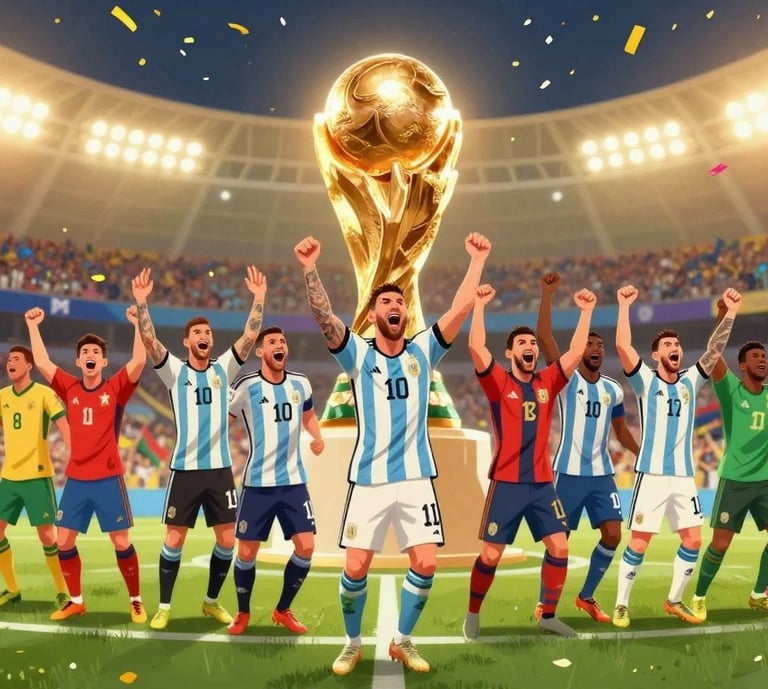
The history of the FIFA world Cup in 10 essential moments
Did you know we're close to the 1,000th match in the history of the FIFA world Cup? This shows how big this global tournament is. It's a huge deal in sports and culture.
Thinking about these matches makes us remember their lasting impact. This article looks at key moments that have shaped the tournament since it started.
Let's explore how ten moments have made football what it is today. By looking at each FIFA milestone, we understand the connection between the past and today's football.
Key Takeaways
Reflecting on the evolution of international football matches.
Analysing ten critical events that changed the sport forever.
Understanding how cultural shifts influence modern tournament organisation.
Recognising the patterns that link past legends to current stars.
Appreciating the global significance of this premier sporting event.
The Genesis of Global Football
Before the roar of modern stadiums, a vision united the globe through football. Early pioneers overcame distance and politics to share a common experience. This vision laid the foundation for the pinnacle of global football.
The vision of Jules Rimet
Jules Rimet, the FIFA president, believed sport could cross borders. He pushed for a world championship, bringing together talent from every continent. His efforts turned a dream into a reality, winning millions of hearts.
"The World Cup is not just a competition; it is a bridge between nations, built on the foundation of mutual respect and the universal language of sport."
Rimet's leadership overcame early scepticism. He fostered international cooperation, ensuring the tournament's survival. Learn more about these early years at the history of football.
The inaugural 1930 tournament in Uruguay
The 1930 tournament was a test of this ambitious project. Held in Uruguay, it faced challenges like long travel for European teams. Yet, it set the spirit of rivalry and passion that defines football today.
The final match between Uruguay and Argentina is legendary. Uruguay's 4-2 victory set a high standard for future tournaments. Here are key features of this historic event:
Feature - Details
Host Nation - Uruguay
Participating Teams - 13 Nations
Final Score - Uruguay 4 - 2 Argentina
Significance - Established the 1930 tournament as a success
This first event showed global football was more than a passing interest. It was a cultural phenomenon waiting to unfold. The legacy of the 1930 tournament still influences our view of the game today.
The history of the FIFA world Cup: A chronological overview
The FIFA World Cup has grown from a small event to a global spectacle. Its journey shows how a simple idea can become a huge event. Looking back, we see how it became the most watched sporting event worldwide.
Evolution from a niche competition to a global spectacle
The early FIFA World Cup was small, with limited travel and focus on local areas. Over time, it grew into a massive cultural event. It now brings billions of people together every four years.

This growth was not by chance. It came from more people interested in the sport and better travel. The tournament now reaches every corner of the globe. It has turned local stars into international icons, making it the top event in football.
The impact of television and commercialisation
Television changed the sport's world. It let fans watch games live, making the world feel smaller. This led to the sport's fast growth in commercial value.
With more money, the tournament became a big business. Sponsors and broadcasters played key roles, keeping it a top global event. Strategic partnerships have helped it stay relevant, even with changing times.
The Miracle of Maracanazo
The 1950 World Cup final left a lasting scar on Brazil's memory. It's a key moment in international football. It shows how victory can quickly turn to defeat.
Uruguay’s shock victory over Brazil in 1950
The final match was at the Maracanã stadium. Brazil just needed a draw to win. But the crowd in Rio de Janeiro was wrong.
The Uruguay v Brazil (1950 FIFA World match was a huge upset. Uruguay came back to win 2-1, shocking the huge crowd.
The psychological impact on Brazilian football
The loss was a deep wound for Brazil. It affected their tactics and fan relations for years. It showed the high stakes of international football.
The Maracanazo changed Brazil's view of sports. It taught players that talent isn't enough under pressure. This event is a powerful lesson in the fleeting nature of success.
The Rise of the King
Few moments in the history of the FIFA World Cup are as transformative as the arrival of a seventeen-year-old Brazilian in 1958. This tournament in Sweden was the grand stage for a young prodigy. Pele arrived as an unknown talent but left as a global phenomenon.
Pele’s emergence in the 1958 tournament
The Brazilian squad entered the competition with a point to prove after previous heartbreaks. They made a tactical shift, adding the youthful energy of Pele to their ranks. His ability to navigate tight defences with grace and precision left everyone in awe.
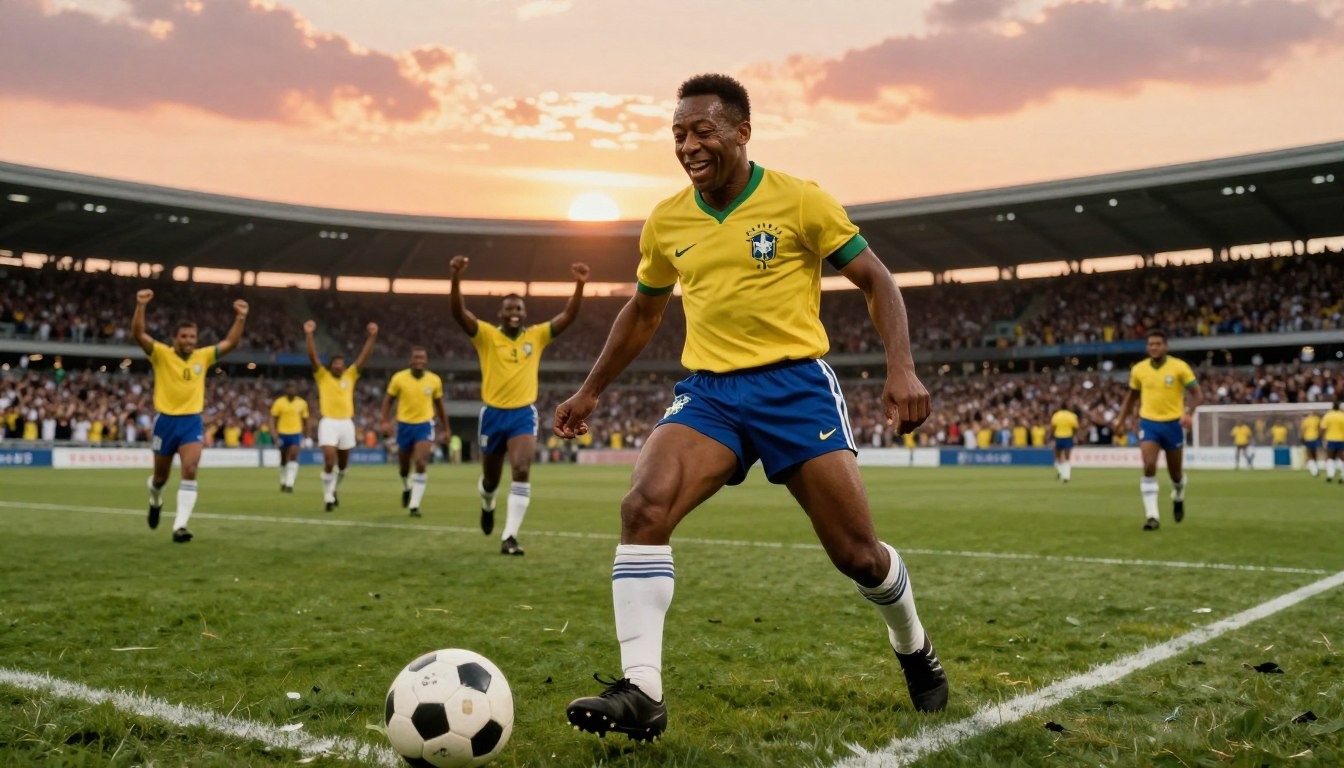
His impact was immediate, leading Brazil to their first-ever title. The table below shows the key contributions of the young star during that historic campaign:
Match Stage - Opponent - Key Contribution
Quarter-final - Wales - Winning Goal
Semi-final - France - Hat-trick
Final - Sweden - Two Goals
How a teenager changed the sport forever
The emergence of Pele did more than just secure a trophy; it elevated the global profile of the competition. He brought a level of technical excellence that forced other nations to rethink their approach to training and tactical development.
"I sometimes feel that football was invented precisely for this magical player." - Anonymous observer of the 1958 tournament
We recognise that Pele set a new standard of excellence that persists to this day. By proving that age was no barrier to brilliance, he inspired generations of young athletes. His legacy remains a cornerstone of football history, reminding us how one individual can fundamentally alter the trajectory of a global sport.
England’s Finest Hour
The summer of 1966 was a turning point for England. Hosting the World Cup, the nation felt the weight of hope and expectation. The World Cup impact of that time deeply influenced the country's culture.
The 1966 tournament on home soil
Hosting the tournament was a chance for England to show its love for football. Every game was a historic moment, drawing huge crowds. The atmosphere was electric, uniting people across the country.
This event was a catalyst for modernising football in the UK. It showed the host's organisational skills, setting a new benchmark for international events. The success proved football's power in shaping national identity.
Read more about the history of Wembley Stadium and the 1966 England victory.
The controversy and triumph of the final at Wembley
The 1966 final is a topic of endless debate. England faced West Germany at Wembley, with tension at its peak. The match tested the players' limits, demanding total determination.
Controversy often surrounds great moments, and this match was no different. The third goal's validity still sparks discussions. It is this very uncertainty that keeps the story alive, making it a key part of football's history.
The victory made the English team legends. The 1966 final is a symbol of England's pride on the global stage. It shows how a single game can shape a nation's spirit for years.
The Total Football Revolution
1974 was a turning point in football, moving from strict rules to a more flexible, smart game. The World Cup that year was a place where new ideas were tested. It was where old ways of playing were pushed aside for something new.
This new way, called Total Football, focused on players moving freely and working together. It was all about being smart on the field, not just strong.

The Dutch influence in the 1974 tournament
The Dutch team, led by Johan Cruyff, was at the heart of this change. They didn't just play hard; they thought deeply about the game. They wanted every player to be ready for any role.
This meant players could switch roles quickly, confusing their opponents. A defender might become a striker, and a midfielder could help out in defence. The key ideas were:
Spatial manipulation: Stretching the field to find gaps in the defence.
Positional interchangeability: No player was stuck in one place.
High-pressing intensity: Taking back the ball quickly after losing it.
Tactical shifts that defined the modern era
Even though the Dutch didn't win in 1974, their impact on football is huge. Today's top teams still use the ideas from that year. They focus on players who can do many things and work well together.
The ideas of Total Football are seen in today's fast-paced games and flexible players. It showed that football is as much about thinking as it is about physical skill. The 1974 World Cup changed how we see the game forever.
The Hand of God and the Genius of Maradona
The 1986 World Cup is forever linked to Maradona. His time in Mexico made the tournament unforgettable. It was a mix of politics and sports, all on the pitch.
Argentina’s 1986 campaign in Mexico
Argentina came to Mexico with a team many doubted. Led by Carlos Bilardo, they played as one, with Maradona at the heart. They mixed strategy with individual talent, ready to beat the world's top teams.
The tournament buzz was high, especially in the quarter-final against England. This game was more than just a match. It was about national pride after the Falklands conflict. It was the emotional peak of the tournament.
The duality of Diego Maradona’s performance
The game against England showed Maradona's duality. In a few minutes, he made two moments that changed football history.
First, he used the infamous Hand of God to cheat. Then, he made a run that left five English players behind, scoring the greatest goal ever. This mix of cheating and brilliance still sparks debate today.
MomentNature of ActionImpactHand of GodControversialChanged the scorelineGoal of the CenturySublimeShowcased geniusMatch OutcomeDecisiveArgentina advanced
The 1986 campaign made Maradona a cultural icon. He showed how one player can change a nation's fate. His legacy in football is forever.
The Globalisation of the Game
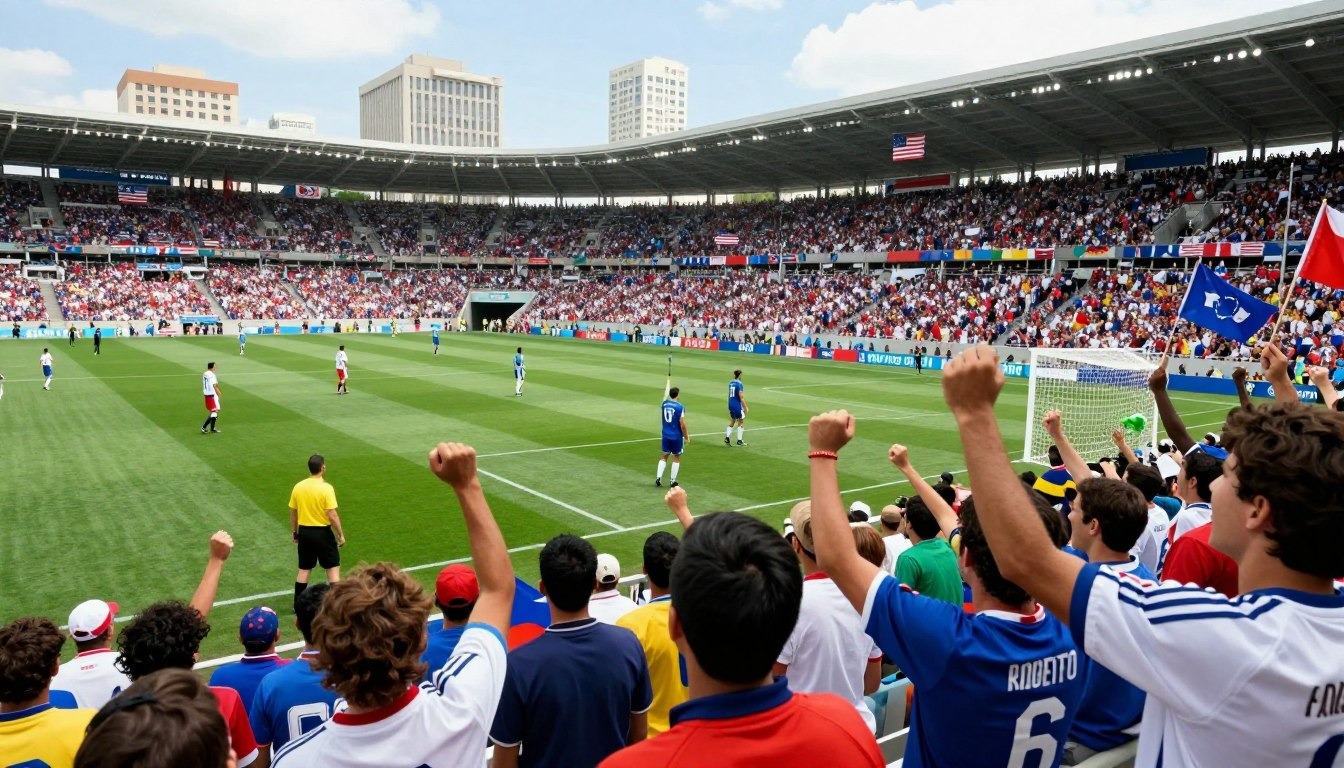
1994 was a turning point for football. It became a universal language. The World Cup was held in the United States, a bold move to grow the sport there.
This move showed that football's passion could cross borders. It attracted new fans worldwide.
The 1994 tournament in the United States
The 1994 World Cup was a game-changer. It broke records and brought professionalism to American sports. It showed that global football could succeed in a market full of other sports.
This tournament was a testament to football's tradition and growth. It proved the game's appeal wasn't just in Europe or South America. It set a high standard for future hosts, making the tournament a global powerhouse.
Expanding the reach of football to new markets
The impact of this expansion was huge. It brought football to a vast North American audience. This boost helped the tournament become a truly global event that grabs attention worldwide.
Today, international matches are more accessible. The 1994 tournament bridged cultures through football. It made sure the game's future would be shaped by its ability to thrive anywhere.
The Zidane Moment and the Modern Era
The 2006 World Cup was a turning point in football history. It marked the shift from the era of individual legends to the modern focus on systems. This tournament left a significant World Cup impact, showing how football was changing rapidly.
The 2006 final and the headbutt heard around the world
The final in Berlin is one of the most iconic moments in football history. It was marked by the shocking Zidane headbutt. This act stripped away the perfect image of a football legend.
This moment showed us that even the best can make mistakes under pressure. It highlighted the high stakes of the tournament. A single mistake can change a player's career forever.
The transition to the contemporary tactical landscape
The 2006 World Cup also marked a shift towards a more structured approach. Teams started focusing on defensive organisation and teamwork over individual skills.
This change brought about a more sophisticated tactical landscape. Coaches began to use strict systems. This ensured that every player worked together as part of a well-oiled machine.
Era - Primary Focus - Tactical Style
Pre-2006 - Individual Flair - Fluid and Creative
Post-2006 - Systemic Efficiency - Structured and Disciplined
Modern Day - Data-Driven Strategy - High-Pressing and Versatile
The 2006 tournament had a big World Cup impact on the world. It showed that the game is as much about mental strength as physical ability. Today, we see the effects of this tactical shift in every match.
The Rise of the Underdogs and New Champions
The 2010 tournament was a turning point in football. It showed how a new, strategic way of playing could change the game. Success in football is not just luck; it's the result of hard work and a clear plan.
Spain’s dominance in 2010
The Spanish team's win in South Africa was a lesson in patience. They focused on keeping the ball, controlling the game. Spain 2010 set a new standard for teamwork over individual skill.
They didn't just win a trophy; they changed how we see football. They showed that a team can control the game with technical skill. This made them a historic team in football.
The shift in power towards European and South American giants
The tournament also showed the strength of top footballing nations. European and South American teams set the high standard. These teams have the experience and skill to handle the game's pressure.
The tournament's history shows that while new teams can surprise, the big names usually win. Spain 2010 was a key moment, showing that strategy is key to success. The desire to win the trophy keeps teams improving and adapting.
The Qatar Spectacle and the Future of the Tournament
We reflect on the challenges and triumphs of the latest football chapter. The Qatar 2022 event was a big change from the usual. It was held in winter, making it different from before.
The 2022 tournament and the winter schedule
Hosting in winter was a new idea, sparking both interest and doubt. But it helped players stay in top shape, avoiding the desert heat. The result was a high-intensity spectacle unlike any other.
This change also affected leagues worldwide. Clubs had to adjust their schedules, focusing on player health. The World Cup impact on football calendars is still being studied.
What lies ahead for the FIFA World Cup
The tournament is set to grow, with more teams and a wider reach. This move aims to include more countries while keeping the competition high. It shows the sport's ability to adapt and grow.
Recent changes suggest the tournament will keep evolving. Future hosts will likely introduce new ideas, keeping the World Cup at the top of sports. Below is a table showing how the tournament has changed.
Tournament Feature - Traditional Model - Modern Evolution
Scheduling - Summer Months - Flexible/Winter
Team Capacity - 32 Nations - 48 Nations
Global Reach - Regional Focus - Broadened Markets
World Cup impact - Standardised - Highly Customised
Conclusion
Our journey through these ten essential moments shows the lasting impact of the tournament. It brings people together and inspires them. Each FIFA milestone adds to a rich football legacy that keeps growing.
This overview should give you a deeper appreciation for the tournament's importance. The history of football is a story that keeps evolving with each match.
We're excited for the next thousand matches. Share your favourite tournament memories with us. Your stories add to the ongoing tale of global football.
FAQ
Who was the architect of the first global football tournament?
The first tournament was a dream of Jules Rimet. He wanted to bring nations together through sport. The first 1930 tournament in Uruguay started a legacy that will reach its 1,000th match soon.
Why is the 1950 "Maracanazo" considered a defining moment in sporting history?
In 1950, Uruguay beat Brazil in Rio de Janeiro. This upset left a deep scar on Brazil. It showed how unpredictable football can be, especially for hosts.
What was the significance of Pele’s debut in 1958?
At seventeen, Pele helped Brazil win their first title. His talent set a new standard. He made the World Cup more exciting for fans worldwide.
How did the 1966 victory influence British sporting culture?
England's win at Wembley against West Germany was a highlight. It made the World Cup a symbol of national pride in Britain.
What is the legacy of the "Total Football" introduced in 1974?
The Netherlands didn't win, but Johan Cruyff changed the game. His team's style influenced modern football tactics.
How is Diego Maradona’s 1986 performance in Mexico viewed today?
A: Diego Maradona’s 1986 campaign is still debated. His goal against England and the "Hand of God" are remembered with awe and controversy.
What role did the 1994 United States tournament play in the globalisation of the sport?
The 1994 World Cup reached new fans in North America. It showed football's power to grow beyond traditional areas.
How did the 2006 final signal a transition into the modern era?
The 2006 final was marked by Zinedine Zidane’s infamous exit. It also showed a move towards more tactical football.
What did Spain’s 2010 victory reveal about the evolution of team-based football?
A: Spain won by focusing on possession and patience. Their success in 2010 showed the importance of strategy in modern football.
In what ways did the 2022 tournament in Qatar challenge traditional norms?
The 2022 tournament changed the football calendar with a winter schedule. It made us think about the future of the World Cup.
The Powerful Blog © 2026
The Powerful Blog informs and inspires the generation of today and tomorrow through honest insights, emerging trends, and meaningful stories that shape our understanding of the world.
Reframe your inbox
Subscribe to our newsletter and never miss a blog.
We care about your data in our privacy policy.