What Jobs will be Lost to AI and How to Prepare
What jobs will be lost to AI We delve into this question offering measured guidance to navigate the evolving world of work with clarity and purpose
ARTIFICIAL INTELLIGENCE

What Jobs will be Lost to AI and How to Prepare
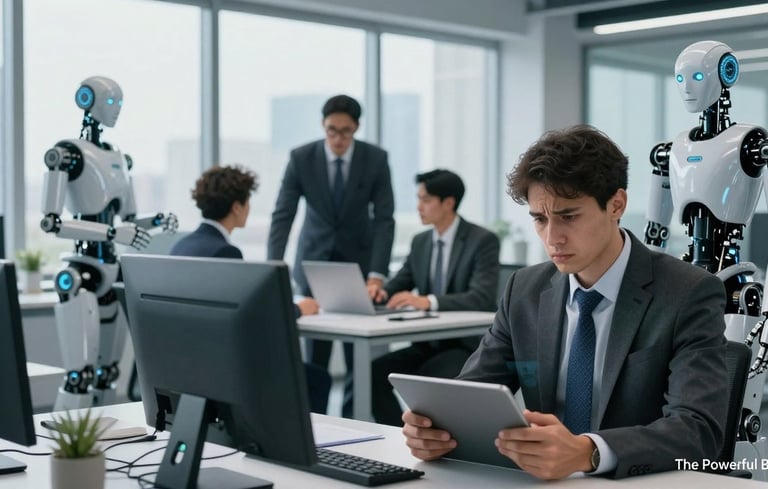
Is technology changing the way we work forever? The fast growth of tech is making us think about our jobs differently. It's natural to worry about our careers.
The rise of artificial intelligence is changing work. Instead of panicking, let's look at the facts carefully.
Figuring out which jobs AI will replace needs careful thought. By studying current trends, we can get ready for the future with confidence.
Key Takeaways
The global labour market is undergoing a significant structural transformation.
Uncertainty is a natural response to rapid technological advancement.
Organisations must prioritise human-centric skills to remain competitive.
Data-driven insights help us navigate professional shifts with greater ease.
Proactive adaptation is more effective than reacting to sudden changes.
The Current Landscape of Artificial Intelligence in the UK
In the UK, intelligent systems are changing our work lives. Artificial intelligence is now a reality, not just a dream. It's changing how we see work and innovation.
The rapid evolution of machine learning
Machine learning has grown fast. McKinsey says it could add $13 trillion to the global economy by 2030. This could increase GDP by 16%, showing the big impact of this technological revolution.
This change is part of a bigger trend in industrial growth. While some worry about job loss, new jobs are being created. The key is to keep up with this change and support workers.
Sectors currently experiencing automation
Many UK industries are changing fast because of automation. Finance uses algorithms for trading and risk checks. Retail uses smart systems to improve supply chains and customer service.
These changes are deep and affect big companies in the UK. Seeing these shifts helps us prepare for the future of work in an automated world.
What Jobs will be Lost to AI: Identifying Vulnerable Roles
As we move into the digital age, it's crucial to know what jobs will be lost to ai. We see that new tech changes jobs in a way that's not even. It mainly affects jobs that follow set patterns. Knowing which jobs are at risk helps us get ready for changes in our work world.

Administrative and clerical positions
Jobs in administration are changing fast. A 2024 study by the Institute for Public Policy Research found that 60% of admin tasks can now be automated. This means jobs like scheduling, filing, and simple emails might see a big change soon.
Routine data entry and processing tasks
Jobs that involve doing the same thing over and over are at risk of automation. When machines can do tasks faster and more accurately than people, it's hard to keep doing them. This is true for jobs that involve a lot of data entry and simple financial tasks.
Manufacturing and manual labour roles
Manufacturing jobs are also changing, but at different speeds in different places. New tech like robots and AI can do tasks that were once only for humans. But, using these systems costs a lot of money, which can slow down changes in smaller companies.
Job Category - Primary Risk Factor - Automation Potential
lData Entry Clerk - Repetitive, rule-based - Very High
Administrative Assistant - Predictable scheduling - High
Assembly Line Worker - Physical, routine tasks - Moderate to High
Strategic Consultant - Complex, creative thought - Low
The effect of automation on our jobs depends on how we adapt. By knowing what jobs will be lost to ai, we can move to jobs that need our unique skills. This is key to keeping our careers stable in a changing world.
The Shift in Creative and Analytical Industries
We're seeing big changes in industries that used to be safe from new tech. Automation isn't just for manual jobs; it's changing creative and analytical fields too. This job displacement isn't just about losing jobs. It's about finding new ways to add value in a digital world.
Impact on copywriting and content generation
Generative AI has changed how we write content. It can write articles and marketing copy fast and sounds almost human. But, it can't replace the nuanced judgment needed for strategy and real stories.
So, writers need to focus on editing and guiding the creative process. AI can help with the basics, freeing up writers to work on complex stories. Knowing about AI job statistics helps us see how important human touch will be in the future.
Automation in financial analysis and accounting
The finance world is also changing fast. Algorithms now do routine tasks like data processing and checking. This means accountants can focus on more important work.
Financial work is now more about understanding data than just crunching numbers. Those who can turn data into useful strategies will keep being vital. The biggest risk of job displacement is for those stuck in repetitive tasks.
The changing nature of legal research
Legal professionals are also adapting to new tech. Tools like Harvey and CoCounsel can analyze legal documents with 90% accuracy. This saves time, letting lawyers focus on more important tasks.
Even with tech doing the research, the human side of law is still key. The table below shows how these roles are evolving to use both tech and human skills.
Industry RoleAI ContributionHuman ValueCopywritingDrafting and scalingStrategy and empathyFinancial AnalysisData processingStrategic interpretationLegal ResearchDocument reviewCourtroom advocacy
To deal with job displacement, we need to keep learning and growing. By using these tools wisely, we can do our jobs better and keep our unique human touch.
Understanding the Difference Between Displacement and Augmentation
We often hear that technology will take our jobs. But the truth about artificial intelligence is more complex. Instead of seeing every new tech as a threat, we should look at how it changes our work.
By knowing the difference between losing a job and making our work better, we get a clearer view of the future.
How AI acts as a tool rather than a replacement
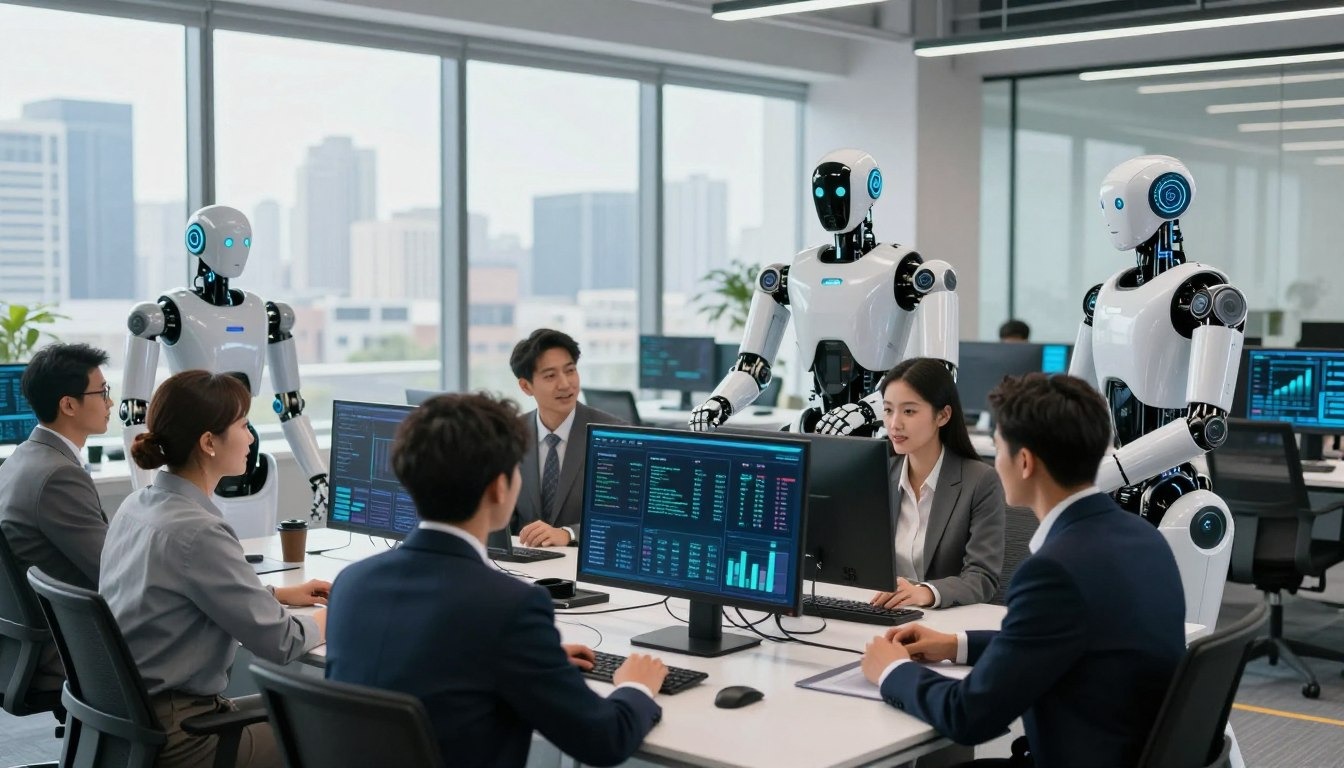
Studies by McKinsey show that artificial intelligence mainly helps us do things better. It doesn't replace jobs entirely. Instead, it handles tasks that take up a lot of our time.
This lets us focus on tasks that need our creativity and judgement. When we use these tools well, we work more efficiently, not less.
Understanding how AI affects work shows that its goal is to help us. By using automation, we can make our work better and achieve more.
The concept of human-in-the-loop systems
Many systems today use 'human-in-the-loop' models. These ensure our work is accurate and ethical. In these systems, automation does the hard work of processing data, but humans check the final results.
This way, we keep our work of high quality. By being in charge of these systems, we stay crucial to our work. We're not just watching; we're guiding the machines.
This mix of human insight and machine power makes our work environment stronger.
Feature - Displacement - Augmentation
Primary Goal - Full task replacement - Enhanced performance
Human Role - Removed from process - Active oversight
Outcome - Cost reduction - Increased value
Focus - Efficiency only - Quality and insight
Skills That Remain Resilient Against Automation
Some skills are hard to replace with machines. While computers can process data fast, they can't understand life's complexities. As more tasks get automated, skills that are uniquely human will become more valuable.
The value of emotional intelligence and empathy
Emotional intelligence is key in today's work world. It lets us understand and respond to others' feelings with care. This skill is crucial in education, where building trust is vital for students' growth.
Studies show only 10% of teaching tasks might be automated by 2040. This shows that human connection is essential for teaching. Algorithms can't replace the empathy needed to inspire and guide students.
Complex problem-solving and critical thinking
Dealing with unclear situations is a human strength. Solving complex problems requires us to use incomplete information and think about long-term effects. Machines can follow rules but struggle with unprecedented scenarios that need moral judgment.
Critical thinking helps us question and find patterns that data might miss. By improving this skill, we keep our work relevant as technology advances. Strategic foresight is about understanding the context of our decisions, not just the outcomes.
Leadership and strategic management capabilities
Leadership is about influencing and motivating people. AI can help with data-driven decisions, but it can't create a shared vision or manage team dynamics. True leaders can bring people together towards a common goal.
Strategic management is about making tough choices that balance different interests and values. These decisions often rely on intuition and experience, rooted in our human history. Those who can lead well and are tech-savvy will have a big advantage.
The Role of Lifelong Learning in a Changing Economy
We live in a time where learning is more valuable than what we already know. The economy is changing fast, and so must our approach to education. Adaptability is now crucial for keeping up in the job market.
By 2030, about 14% of workers might need to change careers because of new technologies. This shows why sticking to one career path is risky. By seeing our careers as a continuous process of growth, we can turn challenges into opportunities for growth.
Upskilling and reskilling initiatives
Upskilling helps us meet the needs of new roles. Reskilling lets us move into new sectors with more opportunities. Investing time in these initiatives is key to protecting our careers.
Companies now see their employees' ability to learn as their biggest asset. Look for employers that invest in training and support for new skills. When we match our learning goals with industry needs, we become vital to the economy.
Utilising online platforms for professional development
Thanks to digital learning, getting quality education is easier than ever. With online courses and bootcamps, we can quickly learn new skills. Taking ownership of our learning is the best way to empower ourselves professionally.
Create a learning plan that includes both technical and soft skills. Spending a few hours each week on online learning helps us stay adaptable. Consistency is the key to mastering the skills needed for the future.
Government and Corporate Responsibility in the UK
The change brought by technology is big, and it's not just up to workers. PwC says up to 30% of jobs could be lost by the mid-2030s. This means a lot of people could lose their jobs. It's important for everyone to share the benefits of new technology.
Policy frameworks for workforce transition
Good policies are key for a smooth change. Governments need to create strong plans. These plans should help those who lose their jobs and encourage learning new skills.
Experts say up to 8 million UK jobs could be lost to AI if the government doesn't act. Legislation should focus on good training that meets the needs of new jobs. This way, the government can help soften the blow of job loss.
Corporate investment in employee training programmes
The private sector also has a big role to play. Companies that see their workers as valuable can handle the future better. Investing in training is crucial for their success.
Companies that support learning help their workers keep up with technology. This makes their teams stronger and more loyal. It's good for the economy when businesses help their people grow.
Adapting Your Career Strategy for an AI-Driven Future
Preparing for an AI-driven future is not just about technical skills. It's about seeing our professional value in a new light. As the workplace changes, being adaptable is key. We need to find where our unique human skills are essential and irreplaceable.

Identifying high-growth sectors
When planning your next career move, focus on industries that need human interaction and problem-solving. Healthcare, specialised education, and creative strategy are less likely to be fully automated. These areas need empathy, nuance, and ethical judgement, skills machines can't match.
By choosing these sectors, you align with the future economy's needs. Look for roles where technology helps, not replaces you. This way, you can focus on the strategic and interpersonal aspects of your job.
Building a personal brand that highlights human value
Your personal brand is a showcase of your unique skills. Highlight the human problems you solve. Leading diverse teams or managing complex relationships are key to your professional identity.
Your brand should show you're more than just a data processor. You're a thoughtful architect of solutions. By leading with emotional intelligence and critical thinking, you stand out from machines. Your ability to think critically and make moral decisions is highly valued.
Networking and community engagement
Networking is crucial in times of rapid change. It's like having professional insurance, offering support and insights. Joining professional groups and forums gives you access to collective wisdom.
Building these connections creates a sense of belonging and purpose. It lets you share ideas on using new technologies while keeping your integrity. The table below shows the shift needed for career resilience.
Attribute - Traditional Focus - Future-Proof Focus
Primary Skill - Routine Execution - Complex Problem-Solving
Value Driver - Speed and Efficiency - Empathy and Strategy
Professional Goal - Job Security - Career Adaptability
Key Asset - Technical Knowledge - Human Intelligence
The Psychological Impact of Technological Unemployment
Technological change has a big impact on people, not just numbers. The fear of losing jobs is real for many. It makes their future careers seem uncertain.
Managing career anxiety and change
Goldman Sachs says AI could change 300 million jobs worldwide. This news makes many people feel anxious about their careers.
It's important to remember that job changes are not a personal failure. They are part of a big economic change. Seeing this helps us separate our worth from our jobs.
Maintaining professional identity during transitions
Keeping a strong sense of self is key when your job changes. Our identity is often tied to our work. But true strength comes from adapting and using our human skills.
When facing job loss, it's okay to feel unsure. Taking this first step is crucial. By focusing on our unique human skills, we can move forward with confidence.
Embracing New Opportunities Created by AI
Innovation is changing how we see work. While technological unemployment is a worry, AI is also opening up new jobs. By staying curious, we can find and enjoy these new paths.
Emerging roles in AI ethics and oversight
As AI becomes part of our lives, we need more rules. There's a growing need for people who can handle the ethics of AI. They make sure AI is fair and follows human values.
This job needs both tech skills and thinking about big ideas. It's not just coding; it's about looking after AI. Knowing how AI will change jobs helps us get ready for these important roles.
Technical maintenance and data management careers
The tech behind artificial intelligence needs constant care. While some jobs are automated, the need for skilled maintenance is growing. Experts are needed to manage big data for AI.
These jobs keep data safe and running smoothly. As we move forward, keeping these systems working will be key. The table below shows how old jobs are turning into new, exciting ones.
Traditional Role - Emerging AI-Driven Role - Core Skill Required
Data Entry Clerk - Data Quality Specialist - Analytical Oversight
Compliance Officer - AI Ethics Auditor - Regulatory Knowledge
IT Support Technician. -AI Infrastructure Engineer - Systems Architecture
Market Researcher - Predictive Analytics Lead - Strategic Interpretation
The fear of technological unemployment shouldn't stop us. By taking on these new roles, we lead in a big economic shift. We're hopeful these changes will make our society better and more innovative.
Conclusion
The future is still to be written, shaped by our choices and how we adapt. The question of what jobs will be lost to AI makes us think deeply about our work.
This time of fast change is a chance to make our human skills better. By focusing on emotional smarts and thinking critically, we can fight against job loss due to technology.
Our ability to learn and change is key to doing well in this new world. We urge you to use these new tools but keep your career values strong.
Let's go forward with a curious mind and confidence. A future where humans and machines work together is possible if we stay informed and proactive.
FAQ
What jobs will be lost to AI in the coming decade?
Jobs at risk include those that are repetitive and follow strict rules. This includes administrative and clerical functions. As artificial intelligence gets better at handling routine tasks, jobs in manufacturing and manual labour will also see big changes. But, the speed of these changes varies, and knowing about these risks is the first step to a secure career.
How can professionals mitigate the risks of job displacement?
We suggest a proactive approach focusing on lifelong learning and upskilling. Using online platforms like LinkedIn Learning or Coursera helps professionals stay adaptable. Moving towards high-growth sectors that value human interaction and problem-solving is crucial in adapting to automation.
Is technological unemployment an inevitable outcome of the current shift?
The fear of technological unemployment is real, but we see it as a time of great change, not an end. History shows that while some jobs disappear, new ones are created. By focusing on human-in-the-loop models, we can create a more stable and inclusive economy.
How is artificial intelligence currently reshaping the UK economy?
A: Machine learning is changing the game, mainly in finance and retail. Big names like HSBC and Sainsbury’s are using these systems to boost productivity. By 2030, artificial intelligence could increase global GDP by 16%, changing our economy forever.
Which skills are most resilient against the rise of automation?
Skills that are hard for machines to copy are still valuable. Empathy, complex critical thinking, and strategic leadership are in high demand. Jobs in education, therapy, and high-level management need human skills that machines can't match.
Will generative AI replace creative roles such as copywriting or legal research?
AI can augment, not replace, many roles. Tools like ChatGPT can process vast amounts of data, but they lack the nuanced judgment needed for complex tasks. In law, for example, AI helps with research, but courtroom advocacy still needs emotional intelligence.
What new career paths are being created by the rise of AI?
As AI becomes more common, new jobs are emerging. Roles in AI ethics, oversight, and complex data management are becoming key. These new fields show that technological progress can lead to meaningful, valuable work for those who stay curious and adaptable.
What is the responsibility of organisations in managing workforce displacement?
It's not just up to individuals to adapt. Corporations should invest in retraining programmes for their employees. We believe that both government policies and private sector investment are crucial in managing job displacement across the UK workforce.
The Powerful Blog © 2026
The Powerful Blog informs and inspires the generation of today and tomorrow through honest insights, emerging trends, and meaningful stories that shape our understanding of the world.
Reframe your inbox
Subscribe to our newsletter and never miss a blog.
We care about your data in our privacy policy.