
Understanding What Artificial Intelligence Can Do Today
We examine what artificial intelligence can do today, offering a measured perspective on its impact and evolving role in society.
ARTIFICIAL INTELLIGENCE


Understanding What Artificial Intelligence Can Do Today
Recent studies show that over 75% of global enterprises use machine learning in their daily work. This change shows how these tools have moved from science fiction to our everyday lives.
We are at a special time where technological evolution changes how we work and interact. To get through this era well, we need to know what artificial intelligence can do to make us more productive and help us make better decisions.
These systems are not just watching; they are actively part of our world today. By looking into what artificial intelligence can do, we can see what's real and what's just talk. We invite you to explore this change with us.
Key Takeaways
Machine learning is now a key part of modern business.
Knowing these technologies is crucial for today's digital world.
Advanced systems are real helpers, not just ideas for the future.
We must focus on real value to avoid getting caught up in marketing.
Keeping up with learning helps us adjust to smart machines in our lives.
Overview of Artificial Intelligence
We are at a special time where machines are getting smarter like humans. This change from just ideas to real use is changing how we use technology.
By looking at these key ideas, we create a common language for our journey. Knowing what artificial intelligence can do helps us see how it's moving from simple rules to smart systems.
Definition of Artificial Intelligence
Artificial intelligence is when computers act like our brains. They focus on learning, reasoning, and self-correction.
These new systems are different from old software. They get better with time, thanks to their ability to learn from experience. This makes them stand out from older technologies.
Importance in Modern Society
These technologies are key to our modern world. They affect everything from how we talk to each other to how we work every day.
The list below shows how AI is different from old computers:
Feature + Traditional Computing + Artificial Intelligence
Logic Basis + Fixed Rules + Pattern Recognition
Data Handling + Structured Only + Unstructured & Complex
Adaptability + None + Continuous Learning
Outcome + Predictable Output + Probabilistic Insight
As we use these systems more, we need to keep asking questions. Knowing what artificial intelligence can do is key for the future. By using these artificial intelligence capabilities, we can tackle big problems that seemed impossible before.
Types of Artificial Intelligence
Today, we see a big difference between systems that do one thing well and those that can do many things like humans. Most artificial intelligence capabilities are made for one task only. By understanding these types, we can see how they change our lives every day.

Narrow AI vs General AI
Narrow AI, or Weak AI, is good at one thing, like translating languages or recognising images. But it can't do other things. It's a precise tool, not a thinking being.
General AI is still just an idea. It would be able to learn and do many things like a human. But we're not there yet, and it's a big challenge.
Applications of Narrow AI
Artificial intelligence is everywhere in our lives. It helps sort our news and manage big tasks. These AI applications are making new things possible in health and finance.
The list below shows how Narrow AI and General AI are different:
Feature + Narrow AI + General AI
Scope + Single, specific task + Broad, multi-domain
Learning + Data-driven patterns + Human-like reasoning
Status + Widely deployed + Theoretical/Research
Adaptability + Limited to training + Highly flexible
Future Prospects of General AI
Thinking about General AI makes us wonder about big changes in society. If we get to General AI, work and creativity might change a lot. We should be careful but also excited to explore this new area.
We need to develop AI in a way that's fair and safe. By doing this, we're ready for more advanced AI. The journey of discovery is only just beginning.
How Artificial Intelligence Works
Understanding how machines learn and interpret the world is key in today's automated world. We often see the functions of artificial intelligence as magical, but they're based on strict math. By looking at these basics, we understand what AI can do in complex settings.
Machine Learning Explained
Machine learning is at the heart of today's innovation. It lets systems get better with more data. Unlike following set rules, these algorithms find patterns in big datasets. This adaptive capability helps machines get better over time.
When we give a system data, it learns to predict future things well. This is key for AI's many tasks, from simple sorting to complex models. It's a cycle of learning, testing, and improving, like how we learn.
Natural Language Processing
Natural Language Processing (NLP) connects human talk to machine logic. It lets computers understand and create human language in a way that feels natural. By understanding words and their meanings, these systems get the subtleties of our language.
This is seen in voice assistants and translation tools that handle different dialects well. The tech doesn't just see words; it gets the contextual intent behind them. This has changed how we use digital tools every day.
Computer Vision Techniques
Computer vision lets machines understand visual info from the world. It uses deep learning to spot objects, faces, and movements. This skill is crucial for tasks that need to see things in real-time.
The list below shows how these core techs are used in real life:
Technology + Primary Mechanism + Key Application
Machine Learning + Pattern Recognition + Predictive Analytics
Natural Language Processing + Linguistic Analysis + Sentiment Analysis
Computer Vision + Image Classification + Object Detection
These techs form the base of all digital intelligence today. As we improve these methods, AI will do more things. We're excited to see how these functions of artificial intelligence will shape our future.
What Artificial Intelligence can do in Healthcare
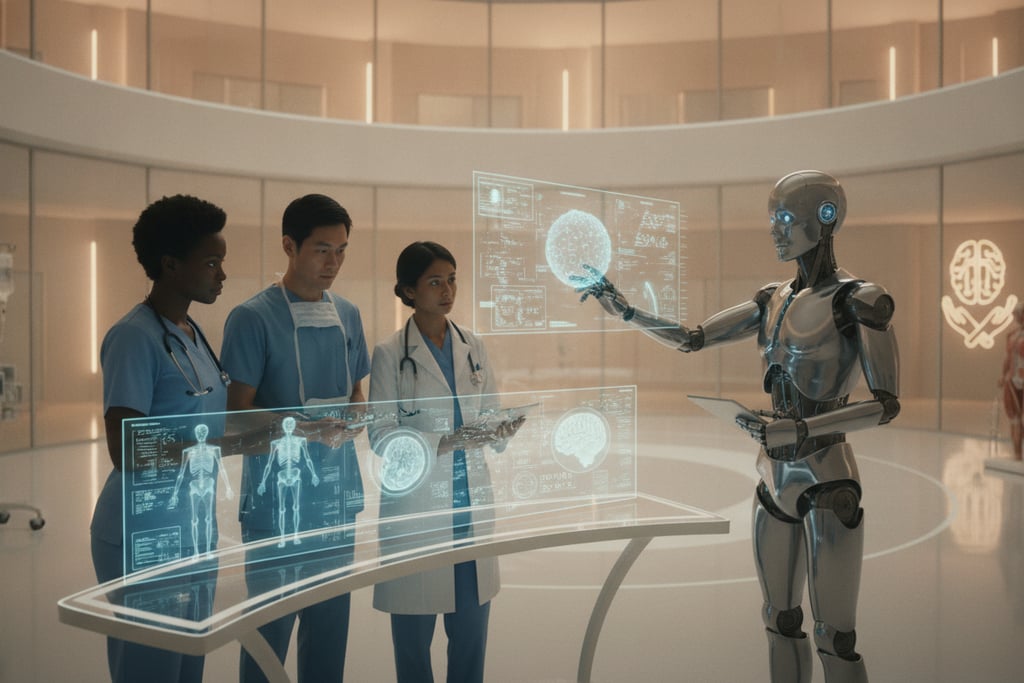
Medical practice is changing fast with the help of smart systems. These systems don't replace doctors but augment their skills. They help doctors by processing lots of data, so they can focus on the patient.
Looking at uses of artificial intelligence in healthcare, we see a trend towards better precision. These tools handle repetitive tasks, giving doctors accurate information. This teamwork is key to improving patient care.
Diagnostic Tools Powered by AI
Getting a correct diagnosis is crucial for treatment. New software helps doctors spot health issues they might miss. It looks at patient history and symptoms, offering insights in real-time.
The tasks AI can perform include finding early signs of chronic conditions. AI spots patterns in data, helping doctors act early. This is a big step forward in preventing illnesses.
AI in Radiology and Imaging
Radiology is a field where AI algorithms have made a big impact. Modern software quickly scans X-rays, MRIs, and CT scans for anomalies. This is crucial when time is short in hospitals.
While AI finds the problem, doctors make the diagnosis. This technology helps prioritise urgent cases, ensuring critical patients get fast care. This mix of human insight and machine speed is changing hospital work.
Personalised Medicine Through AI
We're moving towards treatments that fit each patient's needs. AI uses genetic data and lifestyle factors to help doctors tailor treatments. This makes treatments more effective and reduces side effects.
The list below shows how these technologies are used in different medical areas:
Application Area + Primary Benefit + Clinical Impact
Diagnostic Support + Increased Accuracy + Earlier intervention
Medical Imaging + Rapid Analysis + Optimised workflows
Genomic Research + Tailored Treatment + Improved patient outcomes
Patient Monitoring + Continuous Tracking + Reduced hospital stays
The tasks AI can perform are vast, but we must use them wisely. As we explore uses of artificial intelligence, we focus on patient benefits. By combining innovation with empathy, we aim to build a better healthcare system for all.
AI in Finance
The modern finance world is changing fast thanks to smart systems. The huge amount of data from global markets needs fast processing. By looking at uses of artificial intelligence, we see how these tools help companies stay ahead in tough markets.
Fraud Detection Techniques
Keeping banks and payment systems safe is key. Today, they use machine learning to spot odd patterns quickly. This keeps the financial world safe from fraud.
These systems get better at spotting fake transactions over time. They learn from past data. This is key to artificial intelligence in finance, keeping security up to date.
Algorithmic Trading Strategies
Fast trading is crucial in investing. Algorithmic trading uses smart math to find the best times to buy and sell. It makes decisions quickly, without human mistakes.
These systems handle huge amounts of data better than people. So, companies can grab quick market chances. It shows how AI boosts efficiency in fast trading.
Customer Service Automation
Big financial firms face a lot of customer questions. Smart chatbots and virtual assistants help answer these quickly. This lets human staff deal with harder, more important tasks.
These automated tools are key for keeping services running smoothly. Looking at what AI can do, it's clear these technologies are a must. They help firms stay competitive in a digital world.
AI in Retail
Today's retail world is all about knowing what customers want before they even ask. AI applications are now essential for keeping up. They use lots of data to make shopping feel personal and easy.
AI can help to reduce marketing costs for all sorts of retail businesses including travel agencies and high street shops, but what else can it achieve?
Personalised Shopping Experiences
Retailers are now offering unique shopping paths for everyone. Machine learning looks at what you've bought and browsed to suggest things you might like. This makes customers loyal to the brand.
The latest trends show that these custom suggestions boost sales. People love finding what they need quickly. This makes shopping easier and more enjoyable.
Inventory Management Solutions
The supply chain is changing quietly. Smart systems now guess demand changes well, helping manage stock levels better. This cuts down on waste and keeps popular items in stock.
Automating these tasks makes businesses more efficient. The benefits of artificial intelligence help save money and avoid lost sales. It's a step towards a greener, more responsive retail world.
Chatbots in Customer Service
Chatbots have changed how we talk to brands. They offer quick, 24/7 help, solving simple problems on their own. These AI applications can handle lots of questions at once, so no one has to wait.
While chatbots handle simple tasks, people can focus on more complex ones. This mix makes service both efficient and caring. It aims to make shopping smooth and respect customers' time.
AI in Education
The world of education is changing fast with new digital tools. These AI applications are not just replacing old ways of teaching. They are making learning more engaging.
Teachers now focus on guiding students, helping them think critically. Technology handles the details of each student's progress.
Intelligent Tutoring Systems
Intelligent Tutoring Systems are a big step forward in education. They offer real-time guidance, like a personal coach. They check how students do and give them exercises to improve.
Automated Grading and Feedback
AI helps teachers by doing tasks they don't need to do. Automated grading lets teachers give feedback right away. This helps students learn faster.
Personalised Learning Plans for What Artificial Intelligence Can Do For You
Every student learns at their own pace. Now, systems can adjust to this. They use data to make personalised learning plans that change as the student grows.
This way, no student is left behind. And those who do well get new challenges. It's a fair and exciting way to learn.
By using these technologies, we make education better for everyone. We help teachers and students reach their best. As we improve these AI applications, we focus on keeping teaching personal and meaningful.
AI in Transportation
We're seeing a big change in how we travel, thanks to advanced algorithms. The functions of artificial intelligence are key in making transport faster and safer. These technologies help solve the complex problems of moving people in cities today.

Autonomous Vehicles Overview
Autonomous vehicles are a big step in machine learning. They use sensors to navigate through unpredictable environments. Precision is what makes them react to obstacles faster than humans.
Even though they're not fully autonomous yet, they're already making roads safer. They learn from millions of miles of data to get better at making decisions. This progress is crucial for self-driving cars to become common.
AI in Traffic Management
Managing traffic in busy cities is very complex. Modern cities are using intelligent traffic systems to cut down on congestion and emissions. These systems adjust traffic lights based on real-time data.
They predict traffic jams to help commuters avoid long waits. This approach to city planning saves time and resources. It shows how digital intelligence benefits everyone.
Predictive Maintenance with AI
Keeping infrastructure in good shape is a big challenge. The benefits of artificial intelligence help in maintaining bridges, tunnels, and railways. AI uses sensors to spot problems early, before they become major issues.
This shift from fixing things after they break to preventing problems saves money and keeps people safe. We're moving towards a future where our infrastructure is looked after with great care. The list below shows how these different uses help make our transport system stronger.
Application Area + Primary Function + Key Benefit
Autonomous Vehicles + Real-time navigation + Increased road safety
Traffic Management + Flow optimisation + Reduced congestion
Predictive Maintenance + Structural monitoring + Prevented failures
Ethical Considerations in AI
We think true progress is not just about what we create. It's also about making sure it's good for everyone. As we explore the artificial intelligence possibilities, we must watch out for the moral side of things. True innovation means being open and designing with people in mind.
Bias and Fairness in AI Systems
Algorithmic bias is a big problem in today's systems. When training data has old prejudices, the models keep those biases alive. This happens in automated decisions.
We need to focus on fairness by checking data for bias. Making sure our systems treat everyone fairly is key. It's not just a tech issue; it's essential for trust.
Privacy Concerns with AI Technologies
Using big datasets is a double-edged sword. It helps innovation but also raises privacy worries. Advanced systems need lots of personal info, which makes people concerned about data safety and consent.
We support using privacy-keeping methods like differential privacy and federated learning. These help us learn without betraying the privacy of digital users.
Regulatory Frameworks for AI
As tech's power grows, we need strong rules. We're seeing global efforts to create laws for AI potential. These aim to keep growth safe and ethical.
These rules help balance freedom with safety. By setting clear rules, we can use artificial intelligence possibilities wisely. A careful approach ensures our future is both new and safe.
The Future of AI
Looking ahead, technology is set to change how we use the digital world. We're at a point where artificial intelligence is moving beyond simple tasks. It's starting to work with us in more complex ways.
Emerging Trends in AI Development
AI development is moving fast, towards decentralised processing and creative models. Edge computing is becoming key, letting devices handle data on their own. This improves privacy and makes systems quicker.
Also, AI is getting better at handling different types of data at once. This means it can understand text, images, and sounds all at once. This is a big step forward in making AI more versatile.
Predictions for AI in the Next Decade
In the next ten years, AI will change education and climate science. It will go from being a tool to a partner that can predict our needs. This will make our lives easier and more efficient.
Here's what we expect to see in AI's capabilities over the next decade:
Capability Area + Current State + Future Outlook
Decision Making + Data-driven support + Autonomous strategic planning
Interaction + Text-based interfaces + Seamless multi-modal integration
Learning + Static model training + Continuous, real-time adaptation
Importance of Continuous Learning in AI
To unlock AI's full potential, continuous learning is crucial. This applies to both AI algorithms and the people who work with them. It's about keeping up with the latest advancements.
Lifelong learning will be key in a world where machines do more. By encouraging curiosity and technical skills, we can make sure AI helps us, not replaces us.
Conclusion
We are at a special time where technology is changing how we live. It's important to see beyond tools like ChatGPT or DeepMind. We must think about the big changes happening in society.
Synthesising Core Capabilities
Our journey shows how AI is driving change in many areas. It can understand complex data, giving us insights we couldn't get before. You can find out more about how AI can make our lives by looking at its real-world uses.
Evaluating Societal Impact
AI has huge potential to help us move forward, but we need to be careful. We must focus on ethics and fair rules. Keeping things open and fair is key to making sure AI helps everyone.
Navigating Future Possibilities
The future of AI is exciting, but it depends on us. We should keep exploring and learning as these technologies grow. By staying up to date, we can help shape a future that values us all.
FAQ
What artificial intelligence can do in our current digital landscape?
Artificial intelligence has changed a lot. It's not just about automating tasks anymore. Now, AI is part of our daily lives, helping us sort information and make decisions.
It's behind what Netflix suggests for you and how global supply chains work. AI has become a key part of our world.
What are the primary artificial intelligence capabilities we should understand?
AI can learn, reason, and improve itself. It can handle huge amounts of data and find patterns. This lets machines do things we used to do, like understand language and see images.
How do the functions of artificial intelligence differ between Narrow and General AI?
Narrow AI is good at specific tasks, like Google Search or Spotify. General AI can do anything, like a human. But, we don't have General AI yet.
Now, we have Narrow AI that helps a lot in different areas.
What are some specific tasks AI can perform in the healthcare and finance sectors?
In healthcare, AI quickly checks medical images for diseases. This helps doctors at places like the Mayo Clinic. In finance, AI spots fraud fast and helps with quick trading.
This makes markets safer and more efficient.
What are the most significant benefits of artificial intelligence for modern businesses?
AI makes businesses more efficient and personal. For example, Amazon uses AI for better inventory and shopping. It frees up people to be more creative and strategic.
This boosts productivity and innovation.
How does machine learning contribute to the overall AI potential?
Machine learning is key to AI's growth. It lets algorithms get better with more data. This is why Tesla's Autopilot and DeepMind's AlphaFold work so well.
As data grows, AI will get even smarter.
What ethical artificial intelligence possibilities must we address as these technologies evolve?
We need to watch out for AI's ethics, like bias and privacy. We must have strong rules, like the EU AI Act. This ensures AI is fair and transparent.
Keeping data safe is a big challenge for AI's future.
Why is continuous learning important for the future of AI development?
Learning is crucial for AI and us. As AI gets smarter, we need to keep learning too. This helps us understand and guide AI's growth.
By staying curious, we can make sure AI helps us, not hinders us.
The Powerful Blog © 2026
The Powerful Blog informs and inspires the generation of today and tomorrow through honest insights, emerging trends, and meaningful stories that shape our understanding of the world.
Reframe your inbox
Subscribe to our newsletter and never miss a blog.
We care about your data in our privacy policy.