
Oasis Versus The Beatles Understanding Their Musical Legacy
We examine Oasis Versus The Beatles, uncovering their unique contributions and lasting legacy in British music history and beyond.
MUSIC


Oasis Versus The Beatles: Understanding Their Musical Legacy
Did you know over 2.5 million people tried to get tickets for a single reunion tour recently? This shows how much these icons mean to us. We often debate Oasis versus the Beatles, wondering why they're so important in British music history.
Though they were at their peak decades apart, both groups are key to our culture. Looking into their influence helps us see how music changes over time. By going deeper than just comparing them, we find the enduring patterns that connect them to today's music.
Key Takeaways
Both musical groups represent significant milestones in the evolution of British popular culture.
Recent reunion announcements have reignited public interest in their respective artistic contributions.
We analyse how these bands shaped the sound of their generations through distinct songwriting approaches.
Their legacies continue to influence contemporary artists who seek to capture similar levels of mass appeal.
Understanding these icons provides a clearer perspective on the cyclical nature of musical trends and success.
Introduction to Oasis and The Beatles
In UK music history, The Beatles and Oasis stand out. They changed the music scene in their times. By comparing them, we understand British rock's evolution from the sixties to the Britpop era.
Brief Overview of The Beatles
The Beatles changed music with their studio work and songwriting. They moved from simple tunes to complex ones. Their impact is seen in today's music.
They captured the mood of their time and kept changing their sound. This made them more than just a boy band. Their focus on innovation makes them interesting to compare with later bands.
Brief Overview of Oasis
Oasis was key in the 1990s with their catchy, guitar-based songs. They brought a fresh, working-class vibe to music. Their songs were hits, showing their lasting impact.
Their music was a symbol of British pride and hope. Comparing them to The Beatles shows how both used melody to reach fans. The list below shows their main differences.
Feature - The Beatles - Oasis
Primary Era - 1960s - 1990s
Musical Style - Experimental Pop/Rock - Anthemic Britpop
Studio Approach - Highly Innovative - Raw and Direct
Cultural Impact - Global Paradigm Shift - Britpop Revival
The Musical Roots of The Beatles
The Beatles' sound wasn't created out of thin air. It was shaped by many different influences. Looking back at their early years helps us understand why they're often compared to other artists.

Early Influences
When they first started, the band was surrounded by the new sounds of post-war Britain. They were influenced by American rock and roll, rhythm and blues, and the local skiffle craze in Liverpool.
This mix of sounds let them try out new things with music before they became famous. This time of discovery is key when comparing them to other Beatlesque bands that wanted to capture that special energy.
Songwriting Partnerships
John Lennon and Paul McCartney were the heart of the band's creativity. Their partnership was a masterclass in songwriting. They pushed each other to get better.
They mixed Lennon's deep, personal songs with McCartney's catchy melodies. This mix set a high standard for songwriting. Their early work is a key part of modern music history.
The Rise of Oasis in the 90s
Oasis burst onto the scene in the early 90s, capturing the energy of a generation. They came from Manchester's council estates, giving a voice to the ignored. Their music was a cultural shift that hit hard with Britain's working-class youth.
This time was marked by change and rivalry. Authenticity was key, and Oasis delivered it in spades. They stripped away the fake to show something real and loud.
The Impact of 'Definitely Maybe'
Definitely Maybe hit the scene in 1994, changing the game. It was simple yet powerful, blending hard guitar with catchy melodies. It was a beacon of hope in a gloomy time.
The album stood out for several reasons:
Relatable lyrics that spoke to young people's struggles and dreams.
A raw, unpolished production that captured their live energy.
The charismatic presence of the Gallagher brothers, who dared to be fearless.
Britpop and Cultural Context
Oasis rose during the Britpop era, a time of reclaiming British identity. The north-south divide fueled a fierce music rivalry between bands. The charts became a stage for regional pride.
This context was crucial to their success. By championing the North, Oasis tapped into a desire for a new identity. They were more than a band; they were a symbol of defiance against the norm, leaving a lasting mark on British music.
Comparing Musical Styles: The Beatles vs. Oasis
The most interesting comparisons come when we look at The Beatles and Oasis. The Beatles were all about trying new things, while Oasis focused on catchy, guitar-driven songs. This shows how different the music scene was in their times.
The Beatles loved to experiment in the studio, seeing it as a tool. Oasis, on the other hand, aimed for songs that hit you hard right away. They didn't mess around with too many layers.
Song Composition and Structure
The Beatles were known for breaking the rules in songwriting. They went from simple songs to complex ones with orchestras and weird time signatures.
Oasis, though, stuck to what worked. They used big sounds and classic rock vibes to make songs that everyone could sing along to.
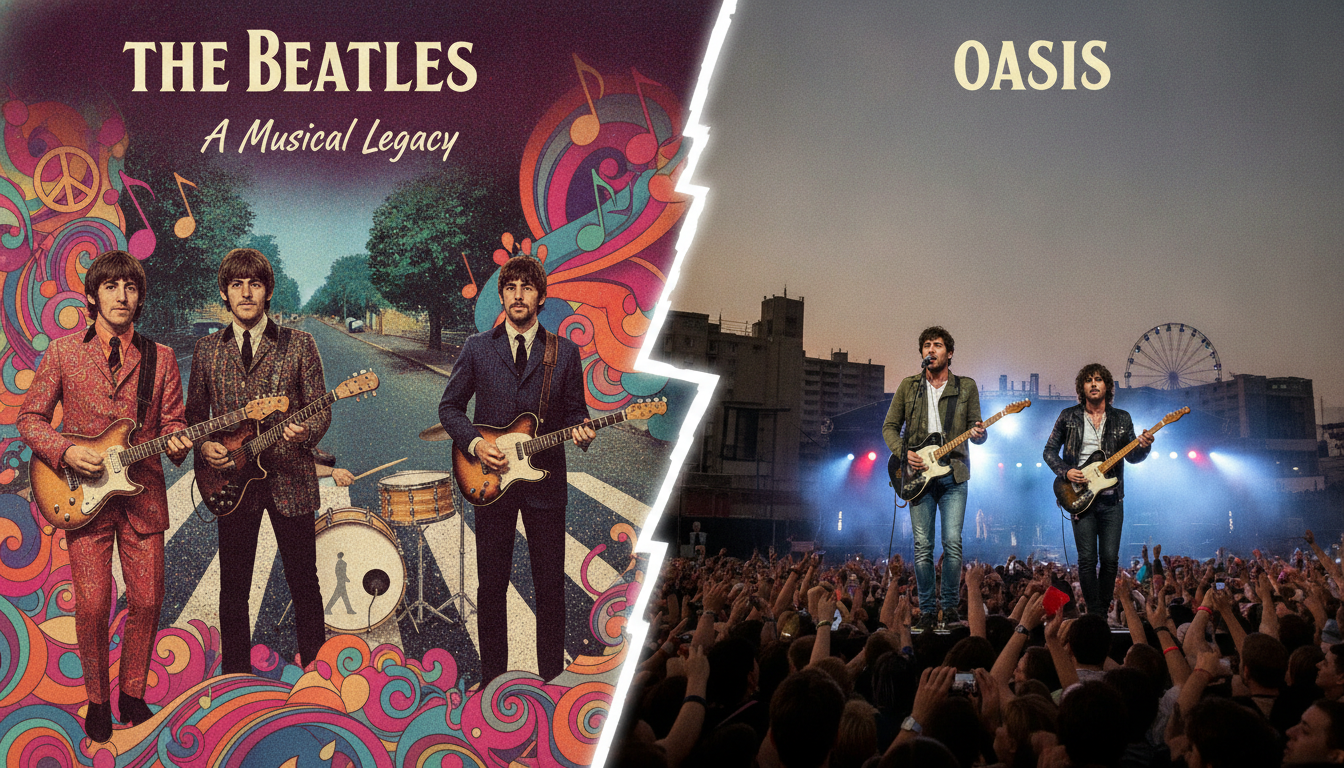
Here's a table showing how they were different:
Feature - The Beatles - Oasis
Primary Focus - Studio Experimentation - Anthemic Accessibility
Structure - Evolving & Complex - Direct & Traditional
Instrumentation - Orchestral & EclecticGuitar - Centric Rock
Lyrical Themes and Innovation
The Beatles started with love songs but soon moved to deep, surreal lyrics. They captured the mood of a generation with their words.
Oasis, though, kept it simple. They wrote about dreams, pride, and wanting to get away. Their songs were meant for big crowds, not secret messages.
These comparisons show how music connects different times. Whether it's through new ideas or timeless sounds, both bands left their mark.
The Influence of The Beatles on Oasis
When we talk about Oasis, we must mention the huge impact of The Beatles on them. The Gallagher brothers didn't just copy their idols; they brought the 1960s vibe into today's music. This tribute helped Oasis find their place in British rock history.
Direct References in Songs
Noel and Liam Gallagher often drew from Lennon-McCartney's work. Their songs show clear nods to The Beatles' classic era. These intentional nods connected different generations of music lovers.
For example, Oasis used chord progressions that reminded fans of early Merseybeat's optimism. This made their music feel connected to the past yet fresh. It showed their music was both nostalgic and timely.
Cultural Footprint and Inspiration
Oasis's style had a huge impact on pop culture. They were seen as the new faces of the 1960s. Their success proved that catchy, guitar-driven songs were still loved in the UK.
Oasis also shaped the 1990s music scene. They brought back the confidence and swagger of their idols. The list below shows how their influence is still seen today.
Feature - The Beatles - Oasis
Songwriting Core - Lennon-McCartney - Noel Gallagher
Primary Aesthetic - Psychedelic/Pop - Britpop/AnthemicCultural
Reach - Global Phenomenon - British Iconography
Legacy Status - Foundational - Modern Successor
The cycle of musical inspiration keeps changing pop culture. Oasis's nod to The Beatles helped them leave their mark. They kept the essence of British songwriting alive for today's fans.
Chart Success and Critical Reception
Looking at the history of popular music, success metrics tell us a lot about the times and the artists. The push for chart success has changed a lot over the years. This change shows how listener tastes and the music industry have evolved.
The Beatles' Records and Achievements
The Beatles set a high bar for global success that few have reached since. They made it possible for rock bands to top charts worldwide. Their impact was more than just a trend; it changed how people listened to and celebrated music on a large scale.
Oasis’ Milestones and Awards
In the 1990s, the Oasis (band) led the Britpop movement with great energy. They quickly rose to fame, breaking records and hitting the UK charts with big hits. Their success showed the mood of the decade.
The list below shows how these two bands reached the top in different ways.
Metric - The Beatles - Oasis
Primary Era - 1960s - 1990s
Global Impact - Unprecedented - Significant
Chart Success - Record-breaking - High-volume
Cultural Legacy - Foundational - Revivalist
Legacy and Longevity of Their Music
It's fascinating to think about how some songs last long after they were first made. Time filters out the fleeting, leaving only the lasting value behind. Looking at British music history, we see that the impact on pop culture is often intentional.
The Beatles' Enduring Influence
The Beatles changed how we see popular music. They moved from simple songs to complex studio work. This artistic growth kept their music relevant long after the sixties excitement faded.
Their impact on pop culture is still felt today. New fans keep discovering their music, finding new meanings in their songs. This ongoing discovery shows their legacy is truly timeless.
Oasis' Place in Music History
Oasis was the voice of the 1990s. They spoke to a disillusioned youth with a unique British identity. Their sound was rooted in the past, but their cultural footprint was modern and urgent.
Their legacy is marked by their raw energy and capturing the hopes of a decade. Their impact on pop culture is seen in how modern artists write songs and present themselves. They showed a band could become a symbol of national pride through personality.
Fan Culture and Reception
How we connect with our favourite bands shapes music history. The bond between an artist and their fanbase reflects the culture of the time. This bond, whether global or local, influences how we remember musical legends.

The Beatles' Global Fanbase
The Beatles' fame knew no borders, creating a truly universal community. Their early years were marked by Beatlemania, changing concerts forever. It was more than just songs; it was a shared hope for change.
Over time, their fanbase grew into a lasting force. Parents share their Beatles records with kids, keeping the music alive across generations. This shows how a band can become a part of the world's shared memory.
Oasis’ Devotees and Britpop Revival
Oasis rose in the 1990s, creating a bond rooted in British identity. The music rivalry of that time sparked a sense of belonging. Fans saw the music as a symbol of pride, shaping their social groups.
This passion fuels the Britpop revival, attracting new fans with 90s nostalgia. The fierce loyalty shows that even local movements can leave a lasting impact. It proves the enduring power of raw, unfiltered energy.
Feature - The Beatles - Oasis
Primary Reach - Global/Universal - National/Cultural
Fan Intensity - Devotional/Iconic - Tribal/Competitive
Key Driver - Cultural Shift - Music Rivalry
Legacy - Timeless - Nostalgic
Conclusion: The Enduring Debate of Their Legacies
The story of Oasis Versus The Beatles is still a big part of our culture. These bands mark different times in British music but share a drive for creativity.
Both groups have set high standards in the music world. Their rise to fame was unique, but their effect on fans is deep.
The fans of both bands keep their music alive for others. Their love for the music sparks ongoing talks about their places in history.
Think about how these artists have influenced your music tastes. Looking closely at their work shows their true impact.
Seeing these bands as part of a bigger story helps us understand more. We hope this journey makes you listen to their classic albums again.
FAQ
Why do we continue to explore the Oasis Versus The Beatles comparison decades after their respective peaks?
Both bands are key to British guitar music. The Beatles changed the 1960s, while Oasis defined the 1990s. The recent reunion of Liam and Noel Gallagher has sparked this debate again. We're looking into how these bands shaped pop culture and why their comparison is still important.
How did the music rivalry of the 1990s affect the chart success of Oasis relative to The Beatles?
The Britpop rivalry, mainly between Oasis and Blur, boosted sales. Oasis had huge hits like (What's the Story) Morning Glory?. Yet, their success was often compared to The Beatles' records. This shows the high expectations for 90s artists to match the Beatles' global success.
In what ways did the Lennon-McCartney songwriting partnership influence the creative output of Oasis?
Noel Gallagher's songs show a clear link to John Lennon and Paul McCartney. Oasis used 1960s techniques, paying homage to The Beatles. This helped Oasis create a sound that was both familiar and new, appealing to a new generation.
How does the fanbase of Oasis differ from the global following of The Beatles?
The Beatles had fans worldwide, across all ages. Oasis started with a British working-class base. Yet, both bands have lasting fans who value authenticity and emotional connection.
What defines the long-term impact on pop culture for both of these iconic bands?
Their lasting impact is how their music has stood the test of time. The Beatles are seen as modern music's foundation. Oasis represents 1990s British optimism. Their music reflects their era while still resonating today.
Can we consider the comparisons between these two bands as merely stylistic imitation?
The relationship is more complex than imitation. Oasis built on The Beatles' foundation but created their own cultural movement. Their success was about capturing a unique "lad culture" and ethos, despite musical debts to The Beatles.
The Powerful Blog © 2026
The Powerful Blog informs and inspires the generation of today and tomorrow through honest insights, emerging trends, and meaningful stories that shape our understanding of the world.
Reframe your inbox
Subscribe to our newsletter and never miss a blog.
We care about your data in our privacy policy.